
Explore ancient Far East cultures
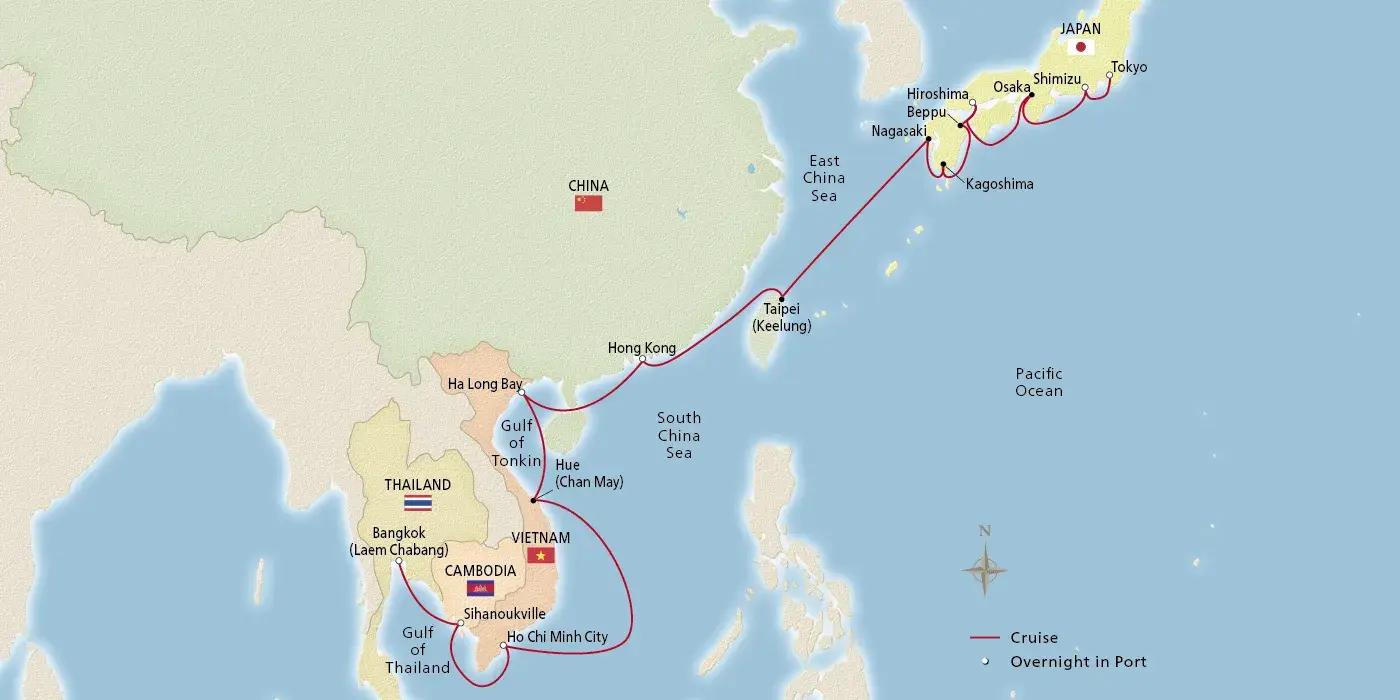
Trace the coast of East Asia when you combine Far Eastern Horizons and Southeast Asia & Hong Kong. This enlightening 29-day voyage takes you into the heart of the Far East and Indochina. Visit five fascinating countries, from Japan and China to Vietnam and Thailand, uncovering the traditions of deeply spiritual nations and their remarkable histories. Overnight stays in eight ports provide a closer look at the region’s many vibrant cultures.
Viking Inclusive Value, more features, services, and excursions included:
- One complimentary shore excursion in every port of call
- Free Wi-Fi (connection speed may vary)
- All onboard meals, featuring regional specialties & always available classics
- Beer, wine & soft drinks with onboard lunch & dinner
- 24-hour specialty coffees, teas & bottled water
- Port taxes & fees
- Ground transfers with Viking Air purchase
- Visits to UNESCO Sites
- Enrichment lectures & Destination Performances
- Complimentary access to The Nordic Spa & Fitness Center.
- Self-service launderettes
- Alternative restaurant dining at no extra charge
- 24-hour room service
Your Stateroom Includes:
- King-size Viking Explorer Bed with luxury linen
- 42" flat-screen LCD TV with intuitive remote & complimentary Movies On Demand
- Large private bathroom with spacious glass-enclosed shower, heated floor, anti-fog mirror & hair dryer
- Premium Freyja® toiletries
- Direct-dial satellite phone & cell service
- Security safe
- 110/220 volt outlets
- Ample USB ports
Itinerary
Tokyo, Japan
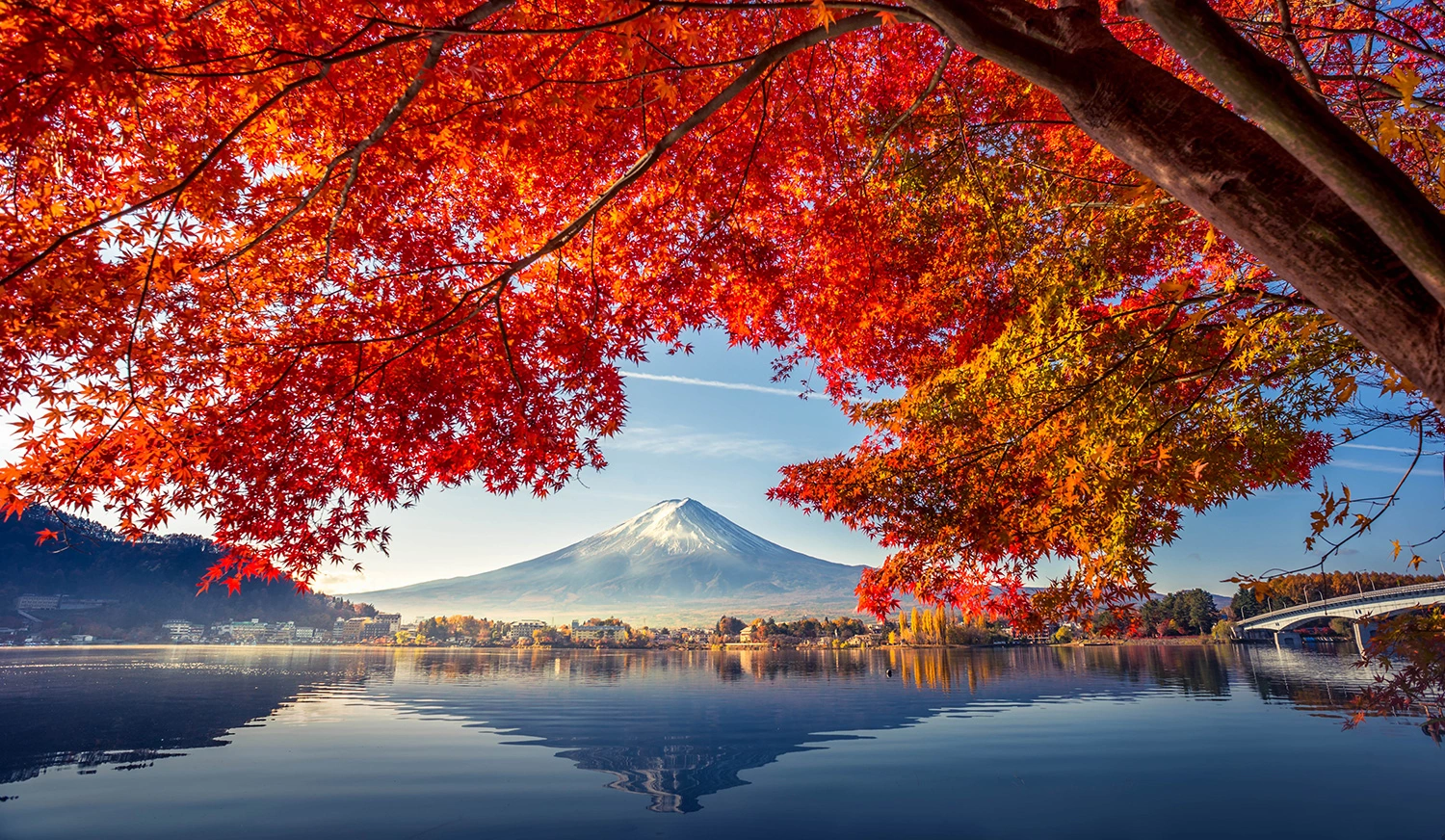
Embark your ship and settle into your stateroom. Tokyo is a spellbinding blend of neon splendor and tranquil Shinto shrines, towering skyscrapers and meditative Zen gardens. Founded as the tiny fishing village of Edo, Tokyo’s history was shaped by emperors and shoguns. As the Edo period progressed, it grew into one of the world’s largest cities, as it remains today. Tokyoites embrace the traditional and the cosmopolitan here, both worshipping at the city’s Asakusa Kannon Temple and frequenting the high-end retail stores of the Ginza district, all while the distant symmetrical cone of Mt. Fuji watches over the city.
Tokyo, Japan
Tokyo as a city was officially dissolved in 1943 and 23 independent municipalities were formed, known as ku. Each neighborhood is representative of a small city yet collectively, they are still recognized as Tokyo. Exploring this vast city is easy, thanks to Tokyo’s excellent transport system. Look to the skies and admire its ever-changing skyline with towering buildings in every corner of the city. Observation platforms feature in many, including Mori Tower or the Metropolitan Government Building.
Shimizu, Japan
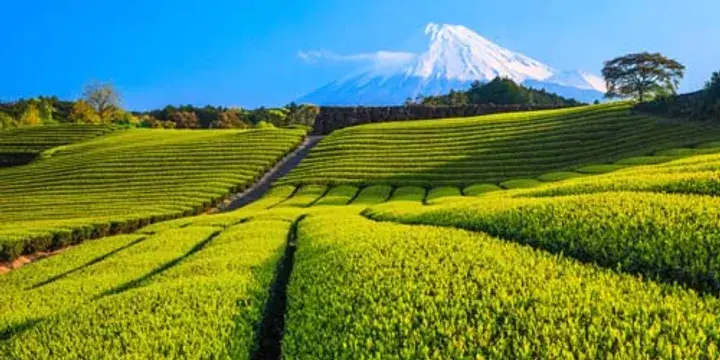
Shimizu is a scenic city set on Suruga Bay, watched over by Mt. Fuji. It has long been a thriving harbor town and prospered during the Edo period. Today, its economy stands upon a vast fishing industry and on the export of green tea, whose leaves are cultivated in nearby hills. Beyond the city limits, wide plains reach coastal hills, and to the original burial place of the nation’s first shogun. This Shinto shrine, Kunōzan Tōshō-gū, is Japan’s oldest. With its flamboyant design, it is dedicated to Tokugawa Ieyasu, the leader who unified Japan after years of civil war.
Shimizu, Japan
Historic Shimizu and its port increased in importance after Tokugawa Ieyasu chose Sumpu Castle as his place of retirement in 1605. By the early 20th century, tea exports were the mainstay activity, while today, the port handles a wide variety of cargo. Along the waterfront, a modern shopping mall houses eateries, movie theaters and a Ferris wheel. While a little further afield, the Kashi-no-Ichi Market sells the day’s catch.
Osaka, Japan
Osaka is located at the mouth of the Yodo River and is second only to Tokyo in size and cultural landmarks. For centuries, it prospered because of its mercantile economy. During the Edo period, it introduced agriculture, particularly rice, to its exports and was soon known as “the nation’s kitchen.” The city is home to some of Japan’s oldest Shinto shrines. Its Sumiyoshi Grand Shrine is the flagship of 2,000 others spread throughout Japan. Each honors the guardian deity of sailors and the deity of prosperity, but the one here is the most majestic.
Hiroshima, Japan
Hiroshima was founded in 1589 and grew to become one of Japan’s most important educational and industrial centers. Military supplies were later exported from here, an industry that would seal the city’s fate at the end of World War II, when an atomic bomb was dropped here on August 6, 1945. It is hard to imagine the destruction today, so modern and forward-looking are its streets and its people. In Peace Memorial Park, the hollowed dome of the former Industrial Promotion Hall symbolizes the city’s hope that nuclear weapons will never be used again.
Hiroshima, Japan
Hiroshima's delta is divided into several islets. It was upon one of these islets that Mōri Terumoto (1553–1625), a feudal lord who ruled over much of the Chūgoku region, constructed Hiroshima Castle. This solidified the city as a jōkamachi (“castle town”). Although the castle had successfully survived into the 20th century, it was unable to withstand the atomic bombing of the city during World War II. In 1958, Hiroshima Castle was restored to its original splendor, complete with a main keep and moat. Today, it houses a museum providing insight into the city’s rich history.
Beppu, Japan
Nestled on the island of Kyushu, between Beppu Bay and a range of picturesque mountains, Beppu is renowned for its hot springs. These onsen, as they are known in Japanese, emerge from eight geothermal hot spots that together boast the second-largest volume of hot water in the world. Since Japan’s Edo period, the waters have been harnessed for curative and health benefits in soothing public baths. Outside the city, landscapes of steaming fissures and mineral-rich bubbling mud pools attract locals and visitors alike.
Kagoshima, Japan
Historic Kagoshima is often compared to the Italian city of Naples for its mild climate, palm-lined streets and the Sakurajima volcano that reminds so many visitors of Italy’s Mt. Vesuvius. Kagoshima experienced great power and prosperity throughout the Edo period. It has been said that the city brought the industrial revolution to Japan’s doorstep after 17 young men ignored a ban on foreign travel and set off to explore England and the United States. They returned with ideas that transformed society, using Western science and technology.
Nagasaki, Japan
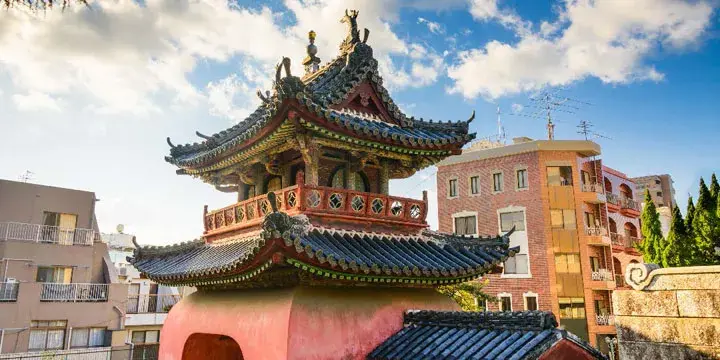
Nagasaki is one of the rare Japanese cities where East and West intermingle. The Dejima district provides a fascinating and unique glimpse of European colonialism in the heart of Japan. Portuguese traders had a strong presence here and later Dutch traders lived here for two centuries. Nagasaki changed forever on August 9, 1945, destroyed by an atomic bomb. The city’s vast Peace Park contains sculptures donated by countries and artists around the world, each dedicated to world harmony and to an unwavering optimism for a peaceful future.
Sail the East China Sea
The East China Sea is a vital maritime route for international trade and fishing, connecting China, Japan and South Korea. Its history is entwined with regional cultural exchange, shaping the area's heritage and identity. Enjoy the amenities of your ship as you sail. Perhaps take a breath of fresh air on a brisk walk around the Promenade or begin your day with a workout in the well-equipped Fitness Center.
Taipei (Keelung), Taiwan, Province of China
Taipei stands proudly as one of the world’s most technologically advanced cities. Yet, the city cherishes centuries-old traditions, which have been shaped by Chinese, Japanese and Western influences. The National Chiang Kai-shek Memorial Hall looks over Liberty Square; the ornate landmark honors the leader who led nationalists from mainland China during the 1949 Communist takeover. However, the most prominent symbol of the city’s robust development is the famed Taipei 101, the world’s tallest skyscraper from 2004 to 2009.
Sail the East China Sea
Chinese and Japanese traders traversed the East China Sea for centuries, before the British, French and Americans crossed these waters during the mid-1800s to establish territories outside the walled city of Shanghai. As you sail, take advantage of the array of delicious cuisine offered on board. You may visit Mamsen’s, our casual gourmet deli, any time from early morning to late at night for a taste of traditional Norwegian fare. Or, dine at Manfredi’s and savor an authentic Italian meal, with options ranging from Milanese risotto to Tuscan inspired classics.
Hong Kong, China
A British Overseas Territory until 1997, Hong Kong is home to long-cherished Eastern traditions amid modern Western sensibilities. This forest of glittering skyscrapers stands between soaring mountains and bustling Victoria Harbour. The entire sweeping vista is best taken in from atop Victoria Peak, lush with landscaped gardens and footpaths. Back down at sea level, Aberdeen provides a fascinating glimpse of China old and new as a skyward-reaching cluster of residential towers watches over a bustling bay where floating villages bob in the waters beside stylish pleasure boats.
Hong Kong, China
Victoria Harbor keeps the heart of Hong Kong beating and it does so with grace and beauty. The natural harbor divides Hong Kong Island from Kowloon. Today, much of the harbor’s beauty lies in its location amid a dense urban area. Junks, tugs, sampans, yachts and the distinctive Star Ferry commuter boats share these teeming waters surrounded by a stunning setting. The city is famed for its nightly light show that plays off the skyline, providing an impressive view of Hong Kong’s forest of skyscrapers and Victoria Peak.
Hong Kong, China
Amid the bustle and bright neon of Hong Kong, temples and shrines to Buddhism offer tranquility and provide insight into the spiritual life of locals. The Chi Lin Nunnery in the city’s heart, a Buddhist complex of gardens, comprises 16 timber-built Tang Dynasty structures recreated here without a single nail. Another pocket of serenity is the Ten Thousand Buddhas Monastery. The entry path, which includes 400 steps, is flanked by some of the statues for which the complex is named. A peaceful monastery and a chance to try sweet do fu fa, a tofu custard, await at the top.
Sail the South China Sea
The South China Sea has been one of the world’s major trade routes for centuries. Today, one-third of the world’s maritime shipping passes through its waters, which are also rich fishing grounds and potential energy resources. As you sail today, attend an informative lecture or watch a film in our state-of-the-art theater. A range of insightful TED Talks and destination-inspired seminars are offered daily.
Ha Long Bay, Vietnam
More than 1,600 islands of towering limestone dot the seascape of Ha Long Bay. Among them, Vietnam emerges at its most authentic. Fishermen cast their nets into the bay, villages hug the shores and children play in the waters as traditional junks drift by. As local lore has it, dragons created this magnificent place when the gods sent them to the coast to protect locals from marauders. The protective beasts breathed countless jewels into the bay, sinking the approaching ships—and creating a spellbinding canvas of mystical-looking monoliths.
Ha Long Bay, Vietnam
Designated a UNESCO World Heritage Site in 1994, Ha Long Bay’s more than 1,600 islands and islets form a stunning seascape of towering limestone pillars surrounded by biodiverse waters, including a vast array of marine algae and more than a thousand species of fish. The bay is also home to 163 species of coral, which provide a colorful undersea home to many of the aquatic inhabitants. Terrestrially, the islands’ dense rain forest ecosystems support various rare species of birdlife and mammals, such as deer, weasels, squirrels and white-tabby and red-haired monkeys.
Hue (Chan May), Vietnam
Chan May serves as a gateway to the fascinating and historic city of Hue, scenically set along the Perfume River. From 1802 to 1945, this was the seat of the Nguyen Dynasty emperors. Numerous historic monuments from that period remain, including the massive walled Imperial City, built in the 19th century, that once housed the country’s most extravagant temples and royal residences and was hailed as the center of politics, religion and culture. Among the Imperial City’s treasures are palaces, shrines and the Forbidden Purple City.
Sail the South China Sea
Sail the South China Sea; after the five oceans of the world, it is the world’s largest body of water covering more than one million square miles. Renew your body, mind and spirit in our Scandinavian-inspired Spa, a Nordic sanctuary of holistic wellness, today while at sea. Whether you unwind in the Sauna, refresh in the Snow Grotto or take a dip in the Thermal Pool, you will feel recharged and revitalized.
Ho Chi Minh City, Vietnam
Founded as a small fishing village, Ho Chi Minh City is now Vietnam’s largest city. Though still commonly called Saigon, locals are as likely to simplify the name of their hometown to HCMC. No matter what you call it, it is a seamless blend of history and modern youthful energy, where pagodas and French colonial grandeur mingle with bustling old-world marketplaces and modern skyscrapers, all against a constant buzz of motor scooters and trill of bicycle bells. From enduring, narrow alleyways to wide, Parisian-style boulevards, Ho Chi Minh City has an identity all its own.
Ho Chi Minh City, Vietnam
Ho Chi Minh City is a heady mix of French and Vietnamese cultures, where baguettes and croissants are sold alongside pho (Vietnamese noodle soup) and motor scooters buzz past colonial-era architecture. The city’s wide boulevards are reminiscent of Paris, lined with jewels such as the Opera House, fashioned after the Petit Palais, and the grand Central Post Office, designed by Gustave Eiffel. Aromatic food stalls and colorful shops purvey local specialties and all manner of Vietnamese wares, from conical hats to ao dai, the traditional silk tunic worn by women.
Ho Chi Minh City, Vietnam
Despite Ho Chi Minh City’s densely packed urban districts, there are several green spaces that can be enjoyed. In Tao Dan Park, locals can be spotted engaging in their daily morning exercise with a round of badminton, tai chi or the outdoor gym equipment. Afternoons welcome a number of classes, from aerobics to dance, attracting good-sized crowds. In addition to the wide open spaces, there are a variety of walking trails shaded by towering trees as well as water features and ponds to be admired.
Scenic Sailing: Gulf of Thailand
The Gulf of Thailand, the massive sea basin bordered by Vietnam, Cambodia, Thailand and Malaysia, is still known as the Gulf of Siam to the Malay and Khmer people. Long stretches of sandy beach, low-lying emerald hills and soaring mountains surround this oval-shaped gulf. The lush hills of Botum Sakor National Park unfold north of Sihanoukville, Cambodia. Along Thailand’s shores, several beach-ringed islands point the way to Laem Chabang port.
Sihanoukville, Cambodia
Sihanoukville is perched on the end of a scenic elevated peninsula. Its almost uninterrupted stretch of sandy shores and turquoise waters lend it one of the nation’s most picturesque settings. This sleepy city was developed after the French departed, so its streets are lined with less fanciful examples of New Khmer architecture and traveled by modern-day tuk-tuks, carriages pulled by motorcycle. The city’s many beaches and offshore islands draw locals and visitors alike, making this one of Cambodia’s prime seaside resorts.
Sihanoukville, Cambodia
Sihanoukville has an abundance of beautiful beaches and a lively culture along its shores, drawing backpackers, young adventurers and other beach lovers to its long stretches of sand. One of its most famous beaches, the tree-shaded Independence Beach, was visited by Jacqueline Kennedy in 1967 during her tour of Cambodia. The clean, white sands of Otres Beach, lined with casuarina trees and coconut palms, are also a firm favorite. At Serendipity Beach, locals and visitors take in the seaside vistas from one of the many beachside outdoor cafés.
Bangkok (Laem Chabang), Thailand
Often called the “City of Angels,” Bangkok is Thailand’s largest and most populous city. A sprawling and heady mix of modern skyscrapers, floating markets and longtail boats skimming the Chao Phraya River, the scintillating capital of old Siam engages all the senses. Yet it all seems devoutly grounded by the presence of its revered gilded wats, or temples. Wat Arun, in particular, can be seen from all corners of the city. This majestic riverside “Temple of Dawn” catches the first light of each day like a pearl, casting a soft glow on one of Asia’s most remarkable cities.
Bangkok (Laem Chabang), Thailand
Bid farewell to your fellow guests and journey home. Or spend more time exploring, perhaps joining one of our extensions.
Terms, conditions and restrictions apply; pricing, availability, and other details subject to change and/ or apply to US or Canadian residents. Please confirm details and booking information with your travel advisor.

